Soula Parassidis Featured in Marie Claire Greece Following Response to Timothée Chalamet’s Opera Remarks
10 min read
Mar 9, 2026
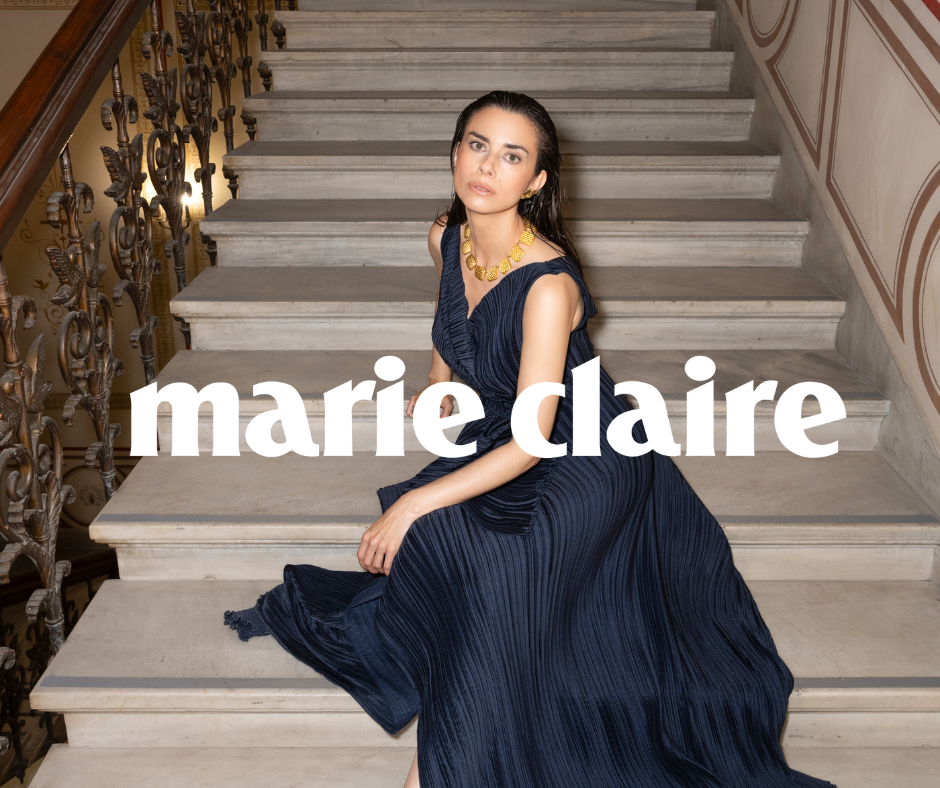
CM Culture artist Soula Parassidis has been featured in Marie Claire Greece following her response to recent comments by Timothée Chalamet about opera and ballet.
In the article, Parassidis, a Greek Canadian soprano and Artistic Director of Living Opera Music, pushes back against the familiar claim that opera is no longer relevant. Rather than treating the debate as a celebrity news cycle moment, she uses it to make a broader point about the enduring value of live performance, especially at a time when artificial intelligence is transforming much of the cultural economy.
Her comments emphasize that opera is not disappearing, even if traditional funding models are under pressure in parts of Europe. She also points to signs of renewal, including younger audiences engaging with the art form. As she notes, Opera America data show that more than half of first time opera attendees are under 45.
Parassidis also addresses the growing conversation around AI and the arts. Her argument is that opera and ballet remain fundamentally tied to physical presence, breath, discipline, and risk in real time, qualities that cannot be easily replicated by synthetic media. In that sense, the very qualities that make these forms seem outside the pace of pop culture may also be what make them durable.
For CM Culture, the Marie Claire Greece feature marks an important example of Soula bringing an artist’s voice into a wider cultural conversation about technology, relevance, and the future of live art.
You can read the full story here.
Share:
CM Culture artist Soula Parassidis has been featured in Marie Claire Greece following her response to recent comments by Timothée Chalamet about opera and ballet.
In the article, Parassidis, a Greek Canadian soprano and Artistic Director of Living Opera Music, pushes back against the familiar claim that opera is no longer relevant. Rather than treating the debate as a celebrity news cycle moment, she uses it to make a broader point about the enduring value of live performance, especially at a time when artificial intelligence is transforming much of the cultural economy.
Her comments emphasize that opera is not disappearing, even if traditional funding models are under pressure in parts of Europe. She also points to signs of renewal, including younger audiences engaging with the art form. As she notes, Opera America data show that more than half of first time opera attendees are under 45.
Parassidis also addresses the growing conversation around AI and the arts. Her argument is that opera and ballet remain fundamentally tied to physical presence, breath, discipline, and risk in real time, qualities that cannot be easily replicated by synthetic media. In that sense, the very qualities that make these forms seem outside the pace of pop culture may also be what make them durable.
For CM Culture, the Marie Claire Greece feature marks an important example of Soula bringing an artist’s voice into a wider cultural conversation about technology, relevance, and the future of live art.
You can read the full story here.
Latest news and events
10 min read
Mar 9, 2026
Soula Parassidis Featured in Marie Claire Greece Following Response to Timothée Chalamet’s Opera Remarks
CM Culture artist Soula Parassidis has been featured in Marie Claire Greece following her response to recent comments by Timothée Chalamet about opera and ballet.
Mar 9, 2026
10 min read
CM Culture artist Soula Parassidis has been featured in Marie Claire Greece following her response to recent comments by Timothée Chalamet about opera and ballet.
In the article, Parassidis, a Greek Canadian soprano and Artistic Director of Living Opera Music, pushes back against the familiar claim that opera is no longer relevant. Rather than treating the debate as a celebrity news cycle moment, she uses it to make a broader point about the enduring value of live performance, especially at a time when artificial intelligence is transforming much of the cultural economy.
Her comments emphasize that opera is not disappearing, even if traditional funding models are under pressure in parts of Europe. She also points to signs of renewal, including younger audiences engaging with the art form. As she notes, Opera America data show that more than half of first time opera attendees are under 45.
Parassidis also addresses the growing conversation around AI and the arts. Her argument is that opera and ballet remain fundamentally tied to physical presence, breath, discipline, and risk in real time, qualities that cannot be easily replicated by synthetic media. In that sense, the very qualities that make these forms seem outside the pace of pop culture may also be what make them durable.
For CM Culture, the Marie Claire Greece feature marks an important example of Soula bringing an artist’s voice into a wider cultural conversation about technology, relevance, and the future of live art.
You can read the full story here.
10 min read
Mar 6, 2026
Living Opera Releases “O Lola” from Radio Days: The Golden Age of American Song
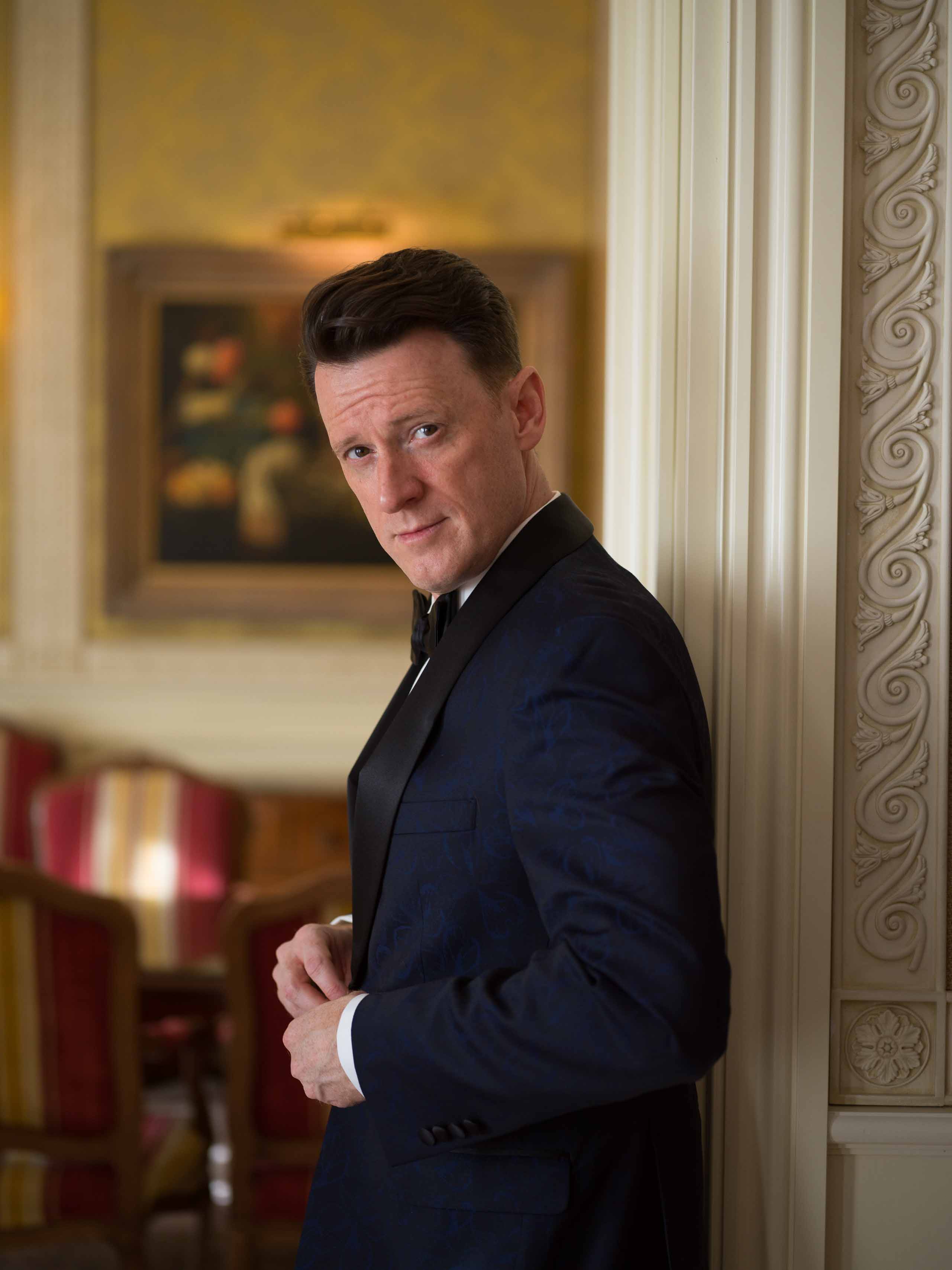
CM Culture is pleased to share the release of “O Lola”, the latest track from Radio Days: The Golden Age of American Song, the new album project from Living Opera, distributed by Universal Music Group.
Mar 6, 2026
10 min read
Living Opera Releases “O Lola” from Radio Days: The Golden Age of American Song
CM Culture is pleased to share the release of "O Lola", the latest track from Radio Days: The Golden Age of American Song, the new album project from Living Opera, distributed by Universal Music Group.
Performed by tenor Norman Reinhardt, “O Lola ch’ai di latti la cammisa” from Mascagni’s Cavalleria Rusticana brings one of opera’s most haunting melodies into the broader musical and historical world of Radio Days. Produced by Grammy nominated songwriter Jeff Trott (If it makes you happy, Soak up the sun), and arranged by Academy Award winning arranger Patrick Warren, the recording reflects the project’s larger aim of connecting the operatic voice to the history of broadcast, recording, and American cultural memory.
The release also speaks to Living Opera’s wider artistic vision: presenting classical repertoire in ways that feel vivid, accessible, and culturally connected without losing musical depth. In the context of Radio Days, “O Lola” is not simply an isolated operatic excerpt. It becomes part of a larger story about how voices travel across media, from the early days of transmission to today’s digital platforms.
The project is led by soprano Soula Parassidis and Norman Reinhardt, founders of Living Opera Music, whose work continues to bridge performance, storytelling, and contemporary cultural strategy. Through releases like “O Lola,” Living Opera is building a model that treats classical music not as a closed tradition, but as a living form that can move across audiences, formats, and generations.
With Radio Days, that approach is especially clear: the project draws on the sound world of the past while presenting it with a distinctly modern framework for recording, distribution, and audience engagement. “O Lola” is a strong example of that balance, rooted in operatic tradition but shaped for a broader cultural conversation.
10 min read
Jan 27, 2026
Why Forbes Is Paying Attention to CM Culture Management—and the Economics of Culture
CM Culture Management was recently featured in Forbes in an article examining the return on investment of culture and the structural realities behind brand–artist collaborations.
Jan 27, 2026
10 min read
Why Forbes Is Paying Attention to CM Culture Management—and the Economics of Culture
CM Culture Management was recently featured in Forbes in an article examining the return on investment of culture and the structural realities behind brand–artist collaborations. The coverage signals something important: culture is no longer being discussed as an abstract value or a communications tool, but as an economic system that either works—or quietly fails.
That distinction matters.
At CM Culture Management, our work begins where most cultural conversations stop. We are not interested in celebrating creativity without interrogating the conditions under which it is produced, distributed, and sustained. The question is not whether culture matters—we all know it does: we like beautiful clothes, captivating scenery, and classy architecture. The question is whether it is being managed.
Culture Is Not a Vibe
One of the central themes highlighted in Forbes is that creative value increasingly outpaces the systems designed to protect it. This is not unique to brands or marketing. It is the defining condition of the cultural sector.
For decades, the arts have operated under a paradox: extraordinary talent, global demand, and institutional prestige—paired with declining real wages, chronic inefficiency, and fragile career paths. These are not moral failures. They are design failures.
CM Culture Management approaches culture as an operating system: a set of rules, incentives, workflows, and economic assumptions that determine outcomes regardless of intent.
What CM Culture Management Actually Does
Our work is often misunderstood as advisory or symbolic, but it is insanely practical and fundamental.
1. Repositioning Artists as Economic Actors
Artists are routinely expected to function as independent contractors without being given the tools required to survive as independent economic units.
We address this directly by equipping artists with:
- Financial literacy relevant to international careers
- Contract comprehension and negotiation capability
- Cash flow and risk management skills
This is not about commercializing art. It is about preventing systemic exploitation through ignorance.
2. Reducing Structural Waste in Cultural Institutions
One of the least discussed failures in cultural organizations is capital destruction disguised as tradition. “You just spent maybe a tenth of your annual budget on a stage, and you’re just throwing it away,” Dr. Makridis said.
We encounter cases where:
- Bespoke stages are built for single productions and discarded
- Significant portions of annual budgets are consumed without reuse planning
- Decisions are made for prestige rather than sustainability
CM Culture Management intervenes at the design stage—introducing lifecycle thinking, reuse strategies, and economic accountability without compromising artistic intent.
3. Treating Culture as a Measurable Asset
Culture influences productivity, retention, innovation, reputation, and long-term organizational resilience. Yet it is rarely governed with the seriousness applied to other strategic assets. “There’s just better decisions that can be made. And so we are trying to show how it can be done,” Dr. Makridis said.
Our work reframes culture as:
- Something that can be designed, not hoped for
- Something that produces returns, not just meaning
- Something that must be aligned with governance, finance, and leadership behavior
Why This Matters Beyond the Arts
What Forbes surfaced is not an arts-only problem. The same dynamics now appear in brand ecosystems, creator economies, and corporate culture more broadly:
- Value creation without proportional protection
- Symbolic support without structural backing
- Short-term optics replacing long-term systems
The arts simply reached this breaking point earlier.
CM Culture Management exists to translate those lessons into repeatable, scalable frameworks for organizations that claim culture as a competitive advantage.
Culture does not fail because people do not care. It fails because no one was accountable for how it worked. That is the gap CM Culture Management was built to close.
